
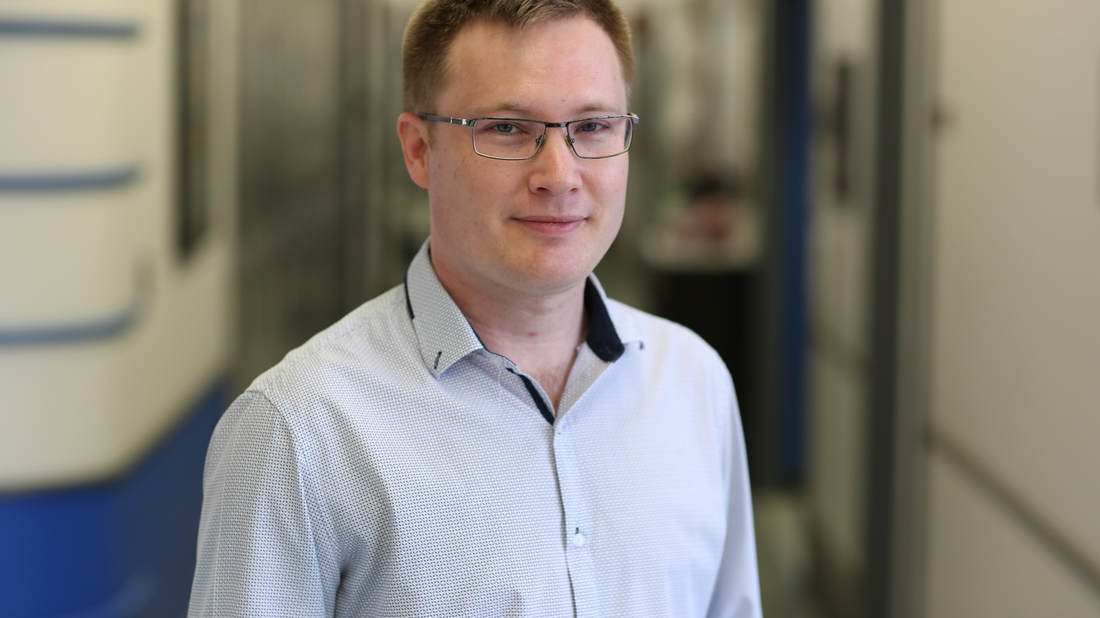
Shea Andrews, PhD
Working Title
Assistant Professor
Preferred Pronouns
He/Him/His
Biography
Dr. Andrews is a genetic epidemiologist looking at the role of genetic and environmental risk factors in Alzheimer's disease. The Andrews Lab focuses on determining the causal pathways that underly the development of Alzheimer’s disease and related dementias (ADRD) by applying statistical genetic and genetic epidemiological approaches to large genetic & phenotypic datasets.
Dr. Shea Andrews is a genetic epidemiologist and Assistant Professor of Psychiatry and Behavioral Sciences at the University of California, San Francisco. His research investigates why some people develop Alzheimer’s disease while others remain resilient, focusing on how genetic susceptibility interacts with environmental, lifestyle, and social factors across the life course. The long-term goal of the Andrews Lab is to translate this knowledge into more accurate and equitable approaches to dementia risk assessment, prevention, and precision care.
The Andrews Lab combines large, deeply characterized cohort studies with statistical genetics, epidemiology, and computational biology. Current NIH- and Alzheimer’s Association–funded research examines three interconnected areas: identifying potentially causal and modifiable drivers of Alzheimer’s disease; determining how mitochondrial dysfunction and other biological aging processes contribute to disease development; and defining how genetic risk—including APOE and polygenic risk—varies across ancestry groups, environmental contexts, biomarkers, and stages of disease. The lab applies methods including genome-wide association studies, polygenic and polyexposure risk scores, Mendelian randomization, longitudinal modeling, and multi-omic data integration.
Students and trainees in the Andrews Lab work with large genetic, biomarker, neuroimaging, cognitive, and clinical datasets while developing skills in reproducible data science, scientific writing, and interdisciplinary research. Projects can be tailored to interests in genetic epidemiology, Alzheimer’s disease, health disparities, biological aging, precision medicine, or computational methods. The lab provides opportunities for trainees to develop independent questions, contribute to manuscripts and conference presentations, and collaborate with researchers across UCSF and national Alzheimer’s disease research consortia.
The Andrews Lab combines large, deeply characterized cohort studies with statistical genetics, epidemiology, and computational biology. Current NIH- and Alzheimer’s Association–funded research examines three interconnected areas: identifying potentially causal and modifiable drivers of Alzheimer’s disease; determining how mitochondrial dysfunction and other biological aging processes contribute to disease development; and defining how genetic risk—including APOE and polygenic risk—varies across ancestry groups, environmental contexts, biomarkers, and stages of disease. The lab applies methods including genome-wide association studies, polygenic and polyexposure risk scores, Mendelian randomization, longitudinal modeling, and multi-omic data integration.
Students and trainees in the Andrews Lab work with large genetic, biomarker, neuroimaging, cognitive, and clinical datasets while developing skills in reproducible data science, scientific writing, and interdisciplinary research. Projects can be tailored to interests in genetic epidemiology, Alzheimer’s disease, health disparities, biological aging, precision medicine, or computational methods. The lab provides opportunities for trainees to develop independent questions, contribute to manuscripts and conference presentations, and collaborate with researchers across UCSF and national Alzheimer’s disease research consortia.
- PhD, 2017 - Medical Sciences, Australian National University
- BSc (Hons), 2012 - Genetics, University of Queensland
- BA, 2010 - Journalism and Mass Communication, and Political Science, University of Queensland
Genome-Wide Association Study
Alzheimer Disease
Mendelian Randomization Analysis
Apolipoproteins E
Genome, Mitochondrial
Cognitive Dysfunction
Dementia
A Kinase Anchor Proteins
Genetic Predisposition To Disease
Polymorphism, Single Nucleotide
Neurofibrillary Tangles
Cognition
DNA, Mitochondrial
Genetic Association Studies
Genetic Loci
Mitochondria
Genetics
Alzheimer's Disease
Lifestyle
February 1, 2021 - November 30, 2025 - Elucidating the causal associations underlying Alzheimer's disease , Principal Investigator . Sponsor: NIH, Sponsor Award ID: R00AG070109
July 15, 2022 - July 14, 2025 - Ancestry-specific effects of APOE on AD endophenotypes and risk factors , Principal Investigator . Sponsor: Alzheimer's Association, Sponsor Award ID: ABA-22-969581
June 1, 2020 - May 1, 2023 - Assessing the causal role of mitochondria in Alzheimer’s disease , Principal Investigator . Sponsor: Alzheimer's Association, Sponsor Award ID: AARF-20-675804
February 1, 2021 - January 31, 2023 - Elucidating the causal associations underlying Alzheimer's disease , Principal Investigator . Sponsor: NIH, Sponsor Award ID: K99AG070109