
Each year, the UCSF Department of Psychiatry and Behavioral Sciences invites a distinguished scholar to speak on campus as part of a special distinguished visiting lectureship series highlighting the integration of biological sciences and psychiatry in honor of Jeanne and Sanford Robertson Endowed Chair and Chair Emeritus Samuel Barondes, MD.
The Seventh Samuel Barondes Lecture in Biological Psychiatry
The UCSF Department of Psychiatry and Behavioral Sciences will host the Seventh Samuel Barondes Lecture in Biological Psychiatry — "Transcriptional and Epigenetic Mechanisms of Drug Addiction" — on Tuesday, January 20, 2026, at the UCSF Nancy Friend Pritzker Psychiatry Building. (It will also be streamed live via Zoom.) This year's honoree will be Eric J. Nestler, MD, PhD, known for his research which has revolutionized our understanding of the molecular basis of drug addiction and depression.
Dr. Nestler’s most significant contribution to neuroscience is his research on molecular mechanisms that regulate gene expression in response to drugs of abuse or stress. By identifying specific transcriptional and epigenetic mechanisms—including the molecular switch ΔFOSB—he revealed how these conditions fundamentally rewire the brain. For millions struggling with treatment-resistant depression or addiction, these findings are being translated into tangible benefits: establishing new platforms for the discovery of more effective treatments, including those that consider sex differences in disease mechanisms and medication responses. Dr. Nestler’s work on the biological basis of stress resilience created a seismic shift in psychiatric treatment approaches. His findings moved the field from merely managing symptoms toward targeting the roots of these disorders and preventing them altogether.
Throughout his career, Dr. Nestler has been an advocate for integrating science with clinical practice. He fostered collaboration across disciplines, broke down traditional silos, and accelerated discovery and innovation. His leadership helped to establish new research departments, institutes, and initiatives at Mount Sinai, including programs in regenerative medicine, genomics, artificial intelligence, and health equity research.
About this year's speaker
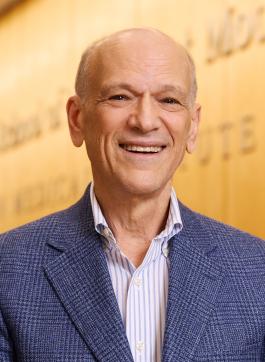
Eric J. Nestler, MD, PhD, is the Anne and Joel Ehrenkranz Dean of the Icahn School of Medicine at Mount Sinai in New York, where he also serves as Chief Scientific Officer and Executive Vice President of the Mount Sinai Health System.
He received his BA, PhD, and MD degrees, and psychiatry residency training from Yale University. He served on the Yale faculty from 1987-2000, where he was the Elizabeth Mears and House Jameson Professor of Psychiatry and Neurobiology and founding director of the Division of Molecular Psychiatry. He moved to Dallas in 2000, where he was the Lou and Ellen McGinley Distinguished Professor and chair of the Department of Psychiatry at the University of Texas Southwestern Medical Center until moving to New York in 2008.
Upon recruitment to Mount Sinai, Dr. Nestler was chair of the Department of Neuroscience (2008-2016), director of the Friedman Brain Institute (2008-2025), and Dean for Academic and Scientific Affairs (2016-2025) prior to his being named dean in July 2025.
Dr. Nestler is a member of the National Academy of Sciences (2025) and National Academy Medicine (1998) and a fellow of the American Academy of Arts and Sciences (2005). He is past president of the American College of Neuropsychopharmacology (2011) and the Society for Neuroscience (2017). He is a founder and scientific advisory board chair for PsychoGenics. Dr. Nestler also chairs the scientific advisory boards for One Mind and the Hope for Depression Research Foundation.
Dr. Nestler has published 800 research papers, reviews, and book chapters. Cited more than 173,000 times, his work has an H-index of 209 on Google Scholar as of 2025, placing him among the most influential scientists in the field. He has co-authored several books.
Recognition of Dr. Nestler’s contributions includes election to the National Academy of Sciences in 2025, the American Academy of Arts and Sciences in 2005, and the National Academy of Medicine in 1998. His many honors include the Patricia S. Goldman-Rakic Prize, the Falcone Prize for Outstanding Achievement in Affective Disorders Research (Colvin Prize), the Gold Medal Award from the Society of Biological Psychiatry, the Julius Axelrod Prize for Mentorship from the American College of Neuropsychopharmacology, and the Peter Seeburg Integrative Neuroscience Prize.
Previous lectureship honorees
- 2025 – Catherine Dulac, PhD
- 2023 – Bryan L. Roth, MD, PhD (video of lecture)
- 2022 – Robert C. Malenka, MD, PhD (video of lecture)
- 2019 – David J. Anderson, PhD (video of lecture)
- 2018 – Cori Bargmann, PhD (video of concert and lecture)
- 2017 – Karl Deisseroth, MD, PhD (video of opening remarks | video of lecture)
About Samuel Barondes, MD
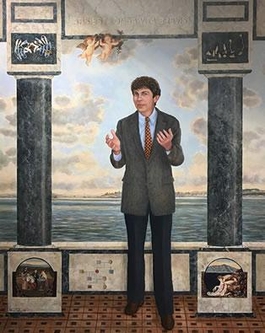
Samuel Barondes, MD, was educated at Columbia and Harvard and learned to do research at the National Institutes of Health as a postdoc with Gordon Tomkins, PhD. He also worked in the laboratory of Marshall Nirenberg, PhD, where he contributed to the Nobel Prize-winning studies that deciphered the genetic code.
Thereafter, Barondes devoted himself to integrating psychiatry with molecular biology and neuroscience. He has been a professor at the University of California since 1969, first at UC San Diego, where he was a founding member of the Department of Psychiatry and the Neuroscience Program, and since 1986 at UC San Francisco, where he initially served as chair of the Department of Psychiatry and director of the Langley Porter Psychiatric Institute. Since 1994, he has served as the Jeanne and Sanford Robertson Endowed Chair and director of the Center for Neurobiology and Psychiatry. Throughout his time at UCSF, Barondes has chaired the Chancellor’s Art Committee, overseeing the acquisition and commissioning of hundreds of works, with special emphasis on the J. Michael Bishop Collection at Mission Bay.
Barondes is a member of the National Academy of Medicine, and a fellow of the American Academy of Arts and Sciences and the American Association for the Advancement of Science. In 1976, he was a founder of the McKnight Neuroscience Program, and served as its president for 10 years. His books include Cellular Dynamics of the Neuron (1969); Neuronal Recognition (1976); Molecules and Mental Illness (1993); Mood Genes (1998); Better Than Prozac (2003); Making Sense of People (2011, 2016); and Before I Sleep: Poems For Children Who Think (2014).