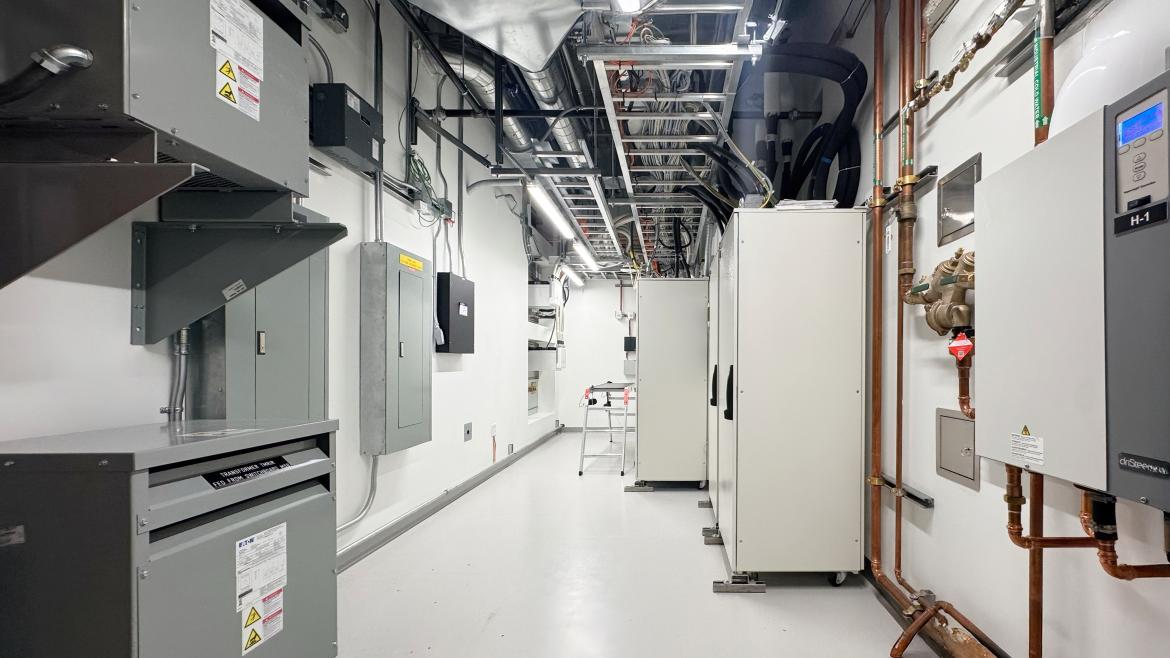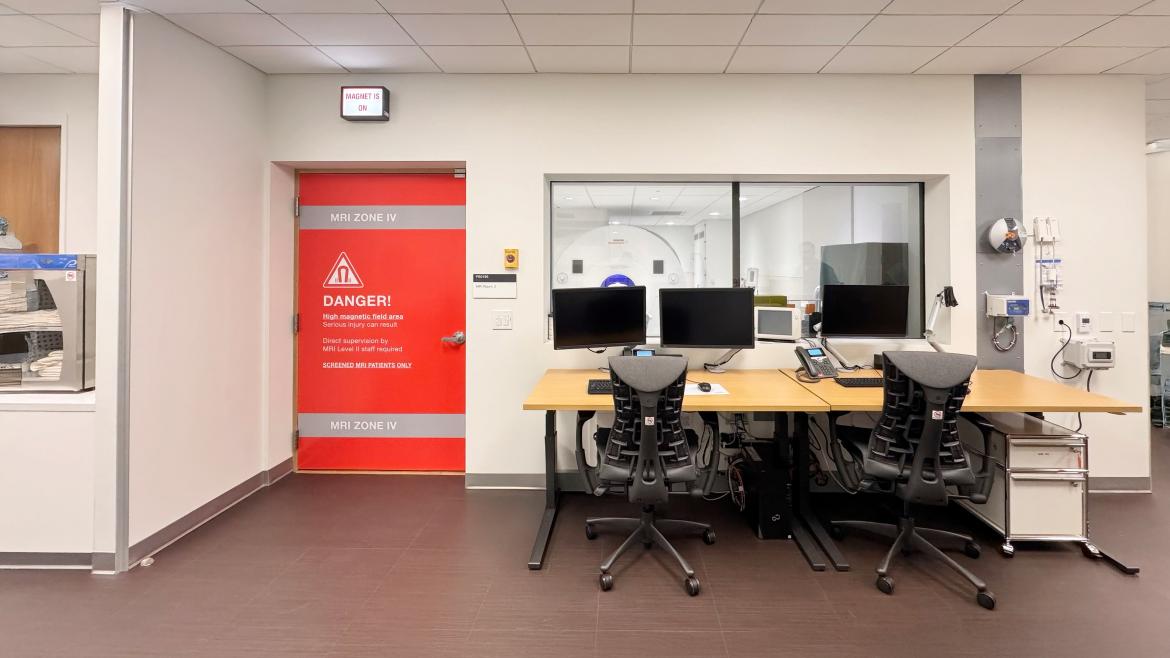
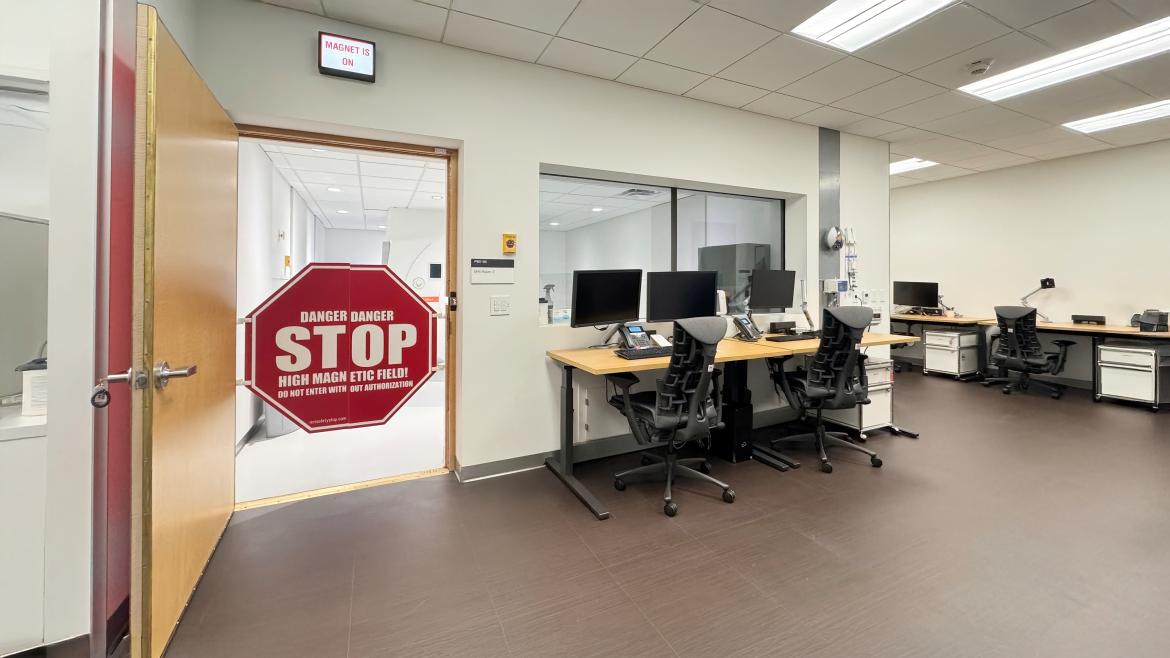
Housed within the Department of Psychiatry and Behavioral Sciences' Nancy Friend Pritzker Psychiatry Building at Mission Bay, the Neuroimaging Technology Research Center (NTRC) is run by the Department of Radiology, under the leadership of Leo Sugrue, MD PhD, as a collaborative effort between the Departments of Radiology, Psychiatry & Behavioral Sciences, Neurology, and Neurosurgery.
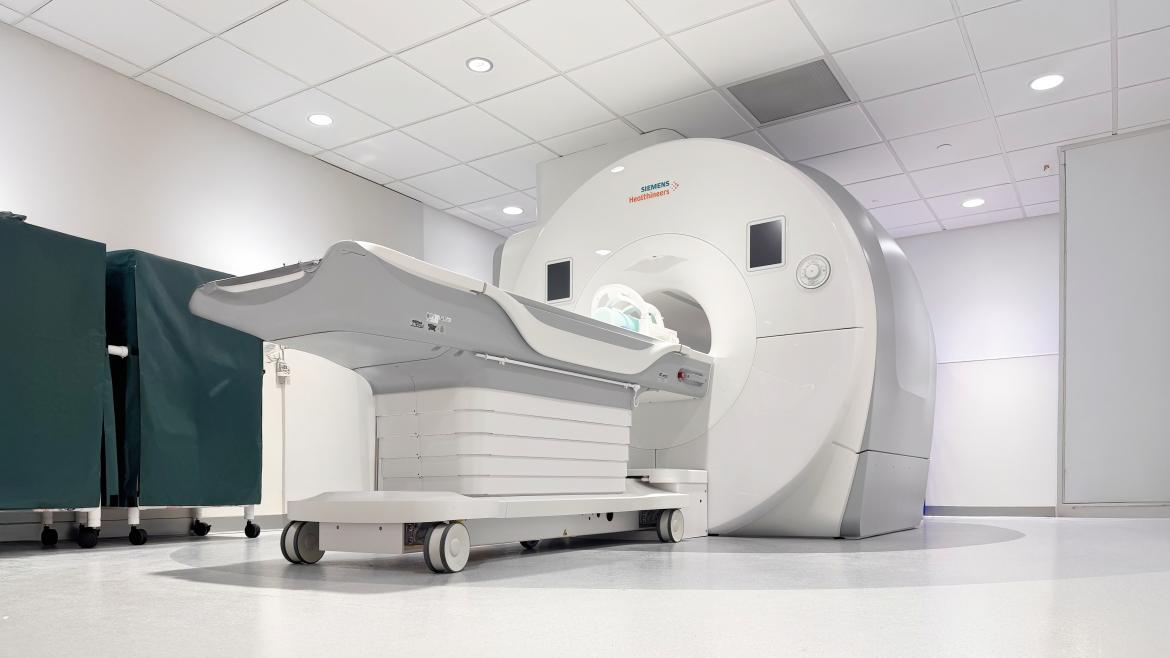
The center’s goal is to pioneer the application of advanced brain imaging and image-guided therapy in the diagnosis and treatment of neuropsychiatric disease. The NTRC has two next generation 3T Siemens Cima.X MRI scanners with gradients optimized for advanced neuroimaging applications, as well as neuromodulation suites for focused ultrasound and transcranial magnetic stimulation.
Getting started with NTRC scanner reservations
Follow these steps to reserve scanner time at the Neuroimaging Technology Research Center (NTRC):
Step 1: Submit your study application
Begin by submitting your imaging protocol and study details through the Full Study Application Process. The NTRC committee reviews applications monthly but can arrange ad hoc reviews for urgent requests.
Access the application form here: Full Study Application Process
Step 2: Approval and reservation instructions
After your application is reviewed, you will receive:
- An official approval letter.
- Detailed instructions on reserving scanner time.
Note: Your approval letter and study ID (ART#) are required to schedule MRI scanner time.
For additional information on reservations, cancellations, and site/parking details, refer to the Radiology Research Scheduling Guide (PDF).
Scanner recharge rate
The current costs associated with using the NTRC scanners can be found on the Department of Radiology and Biomedical Imaging Recharge Rate List (line 61 – 68) under "Human Imaging Core Services - Neuroimaging Technology Research Center (NTRC)". Rates are provided for both internal and external users, with details on the applicable units and the effective dates for any rate changes.
NTRC policy requires a safety read to be completed the first time a research subject is scanned at our site or if it has been greater than 12 months since their last scan at NTRC. It is the responsibility of the study team to determine at the time of scheduling if a scan requires a safety read.
The current cost of an NTRC safety read can be found on the Department of Radiology and Biomedical Imaging Recharge Rate List under "Clinical Imaging Core Services - Neuroradiology Research Image Analysis."
Step 3. Data Retrieval, Storage and Computing Infrastructure
NTRC Research Imaging Portal
The NTRC Research Imaging Portal is a secure, access-controlled, NTRC-exclusive platform designed to support UCSF researchers conducting studies on NTRC scanners. The portal provides centralized storage and access to research imaging data for assigned NTRC studies, as part of NTRC imaging services.
Researchers can access raw DICOM data generated at the scanner, as well as derived imaging datasets prepared for research use. These include BIDS-formatted data (with appropriate field map associations); processed functional MRI outputs (preprocessing with fMRIPrep, denoising and connectivity estimation via XCP-D); and diffusion MRI outputs (QSIPrep, with tractography via MRtrix3). The portal supports data download, in-application visualization, safety read requests and review, scan tracking with detailed notes, and PI-managed access for study team members.
Automated Image Retrieval (AIR)
AIR is a self-service platform for accessing clinical and research imaging data. It automates the deidentification of image headers but requires users to manually review and remove Protected Health Information (PHI) from pixel data. AIR is best for researchers who need quick access and are comfortable managing their own data transfer workflows.
For detailed information, visit the AIR Services page.
Full-Service Data Transfer (CRCs)
The Radiology Clinical Research Coordinators (CRCs) provide a full-service solution for data transfer, including deidentification, regulatory support, and technical assistance. This service is ideal for researchers seeking comprehensive support from data retrieval to delivery.
For comprehensive details, visit the Full-Service Data Transfer page.
Comparison: AIR vs. Full-Service Data Transfer
|
Feature |
Self-Service (AIR) |
Full-Service (CRCs) |
|---|---|---|
|
PHI Handling |
Manual by user |
Deidentified by CRCs |
|
Data Transfer Management |
User-managed |
CRCs handle transfer |
|
Timeline |
Platform access within 24 hours |
Assigned in 1–3 days, transfer in 5–7 days |
|
Bulk Requests |
Allowed |
Not accepted |
|
Support Provided |
Via e-mail [email protected] |
Includes regulatory and technical support |
|
Key Tools |
AIR Platform |
PACS and 3D Lab |
Scientific Computing Services (SCS)
UCSF’s Scientific Computing Services (SCS) complements AIR and CRC services by providing:
- High-performance computing clusters for large-scale data analysis.
- Secure, scalable storage for research data.
- Expert consulting for custom workflows.
These services empower researchers to process and analyze imaging data efficiently while ensuring compliance with UCSF's data security and privacy standards.
For additional information, explore Biomedical Imaging Research Support Services.
Data Retrieval, Storage, and Computing Infrastructure: Service Rates
A breakdown of the rates for services related to data retrieval, storage, and scientific computing infrastructure available at UCSF can be found on the Department of Radiology and Biomedical Imaging Recharge Rate List under "Scientific Computing Core Services - Scientific Computing Services (SCS, Data Management)." These rates apply to both internal and external users, with details on the applicable units and the effective date for any rate changes.